
BOOKING A FLIGHT WITH A BABY
This page may contain compensated links. For more information read our disclaimer here.
by Kristin Young | Updated On: August 23, 2019
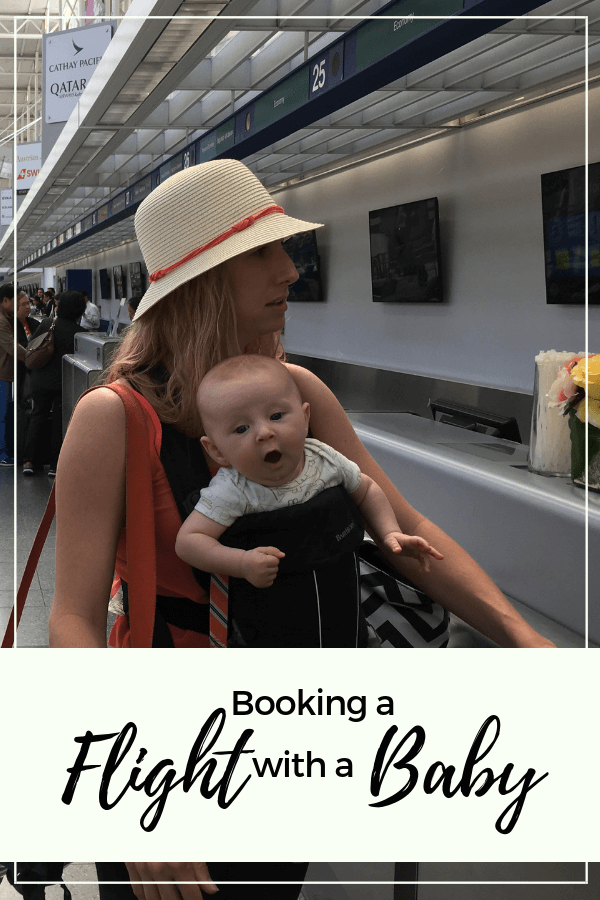
A lot of new parents tend to back away from travel with a baby, but as long as you plan ahead and know what to expect, it can be a breeze. After many flights with our little guys, we’ve compiled a list of everything you need to know before flying with a baby.


WHEN CAN BABY FLY
When a baby CAN fly is definitely a different thing than when a baby SHOULD fly. Most airlines will let a baby fly at 7 days (possibly earlier with a physician’s letter), but planes are a hotbed of germs and you should really consider not taking the baby on a plane that early. From experience, the first few days after having a baby, you really do not want to deal with airports, planes, or travel. Plus, you’ll want to protect that new little one with everything you have, and taking him on a plane that young is dangerous. Most doctors recommend waiting at least 2 months, and 4-6 if possible. We waited until 3 months and discussed it extensively with both our pediatrician and the travel nurse at our local health department. They’ll also be able to advise on any additional vaccinations that may be necessary or useful to have.
Major US Carriers’ Travel with Children Pages
If flying with another airline, Google “your airline” plus travel with children, and you’ll find most will have a dedicated page. Always double-check with your airline to see if there are any other restrictions.
BOOKING FLIGHTS
You can take your baby on a flight as a lap infant, or book a separate seat. If buying a separate seat, some airlines give a discounted rate for children, so make sure the age is properly marked when booking. We have always traveled with our children as lap infants, but the FAA does recommend purchasing an additional seat and having the baby travel in a car seat for safety.
Read: Lap Infant vs Seat
Babies can usually fly for free on your lap domestically, but even lap infants pay a portion of the ticket price (and that doesn’t always mean your price) plus taxes and fees for international flights.
Lap infants DO need a ticket, and typically this cannot be booked online. Usually you’ll need to contact the airline to add the baby to your reservation.
Book your flights strategically. Long layovers may sound great for a break from the plane, but they will probably wear everyone down more. Direct flights are usually easiest: like a Band-Aid, just get it done in one pull. It’s somewhat of a crap shoot on whether flying while the baby would normally be asleep or awake is easier. There are two schools of thought:
- Book during nap time or overnight.
Pro: baby will probably sleep the whole time.
Con: baby may struggle to sleep and get super-cranky.
- Book while baby will be awake.
Pros: Baby probably won’t be cranky because he can’t sleep.
Cons: You’ll have to deal with keeping a baby happy and sitting relatively still the whole trip.
Bottom line: know your kid, and plan accordingly. We have one “book and puzzle” kind of kid, who once actually asked to stay on the plane longer after a 12-hour flight. Our other one is more of a music and climbing kind of guy, so sitting quietly is a bit of a challenge for him.
DOCUMENTS
If traveling domestically, a birth certificate is usually all that’s needed as identification for baby, but make sure to double-check with your airline. Internationally, any child will be required to have a passport, and any additional visas.
Children traveling without one or both parents will need to bring a notarized letter from the parent stating that he or she acknowledges the travel and gives permission.
Official Border Protection Documentation
Sample Letter Template
If the other parent is deceased, or there is no second parent, make sure to bring the death certificate or legal documents as proof.
SEAT SELECTION
Good seat assignments can make or break a flight. If pre-booking seat assignments isn’t available, call a week or so before the flight to see if you can get seats assigned.
Window seats give you privacy for nursing, a wall to rest your head on, and a window for baby to look out. However, if you’re traveling alone, you will be pretty much restricted to your seat.
Aisle seats don’t offer as much privacy, but plus points are that you can jump up and run to the bathroom if baby has an accident, or walk the aisles if he gets fussy.
If traveling alone, I always choose an aisle seat; I have a partner, I think the window is better.
GET TO THE AIRPORT EARLY
You won’t be able to check-in online or use the self check-in kiosks for most flights if flying with a lap infant. So, get to the airport EARLY. This will give you plenty of time to wait in line at check-in and TSA, as well as factoring in bathroom breaks, snacks, playing at the playground or watching planes take off. You don’t want to be running through the airport with a baby.
WHAT YOU CAN BRING
Again, double-check with your airline, but most allow a lap infant to bring a diaper bag, carseat, and stroller. We always bring a stroller, but usually check it and carry baby in a front pack. Carseats, to us, are too much of a pain to travel with, so we almost always rent them if needed.
TSA allows breast milk, water, juice, baby food, ice packs, and liquid teethers to exceed the 3-1-1 liquid rule. However, extra screening will be required.
Now that you know what is and isn’t allowed, check out some tips on getting through the airport and flight with a baby. It’s a whole new ballgame, especially with a lap infant.
Next Up: Surviving the Airport with a Baby
PIN IT!
About the Author: Kristin Young